
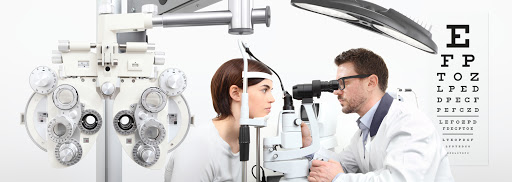
Who is it for?
This course has been designed for students with an ambition to become leaders in the field of optometry. You should have a passion for science and will enjoy a future working with the public and colleagues across the healthcare sector. Optometry is a career where you have the opportunity to make a real difference to peoples’ lives who suffer from vision impairment and sight loss.
Objectives
As a student on the Diploma in Optometry course, you will be studying within a Division which has an internationally excellent reputation within the optometric profession. You will study a curriculum informed by our world leading research which is at the cutting edge of advances in the sector and be taught by academics who are leaders in their field.
Throughout your time at UKAP, you will benefit from a combination of teaching styles including clinics and laboratories in our specialist. During your studies, you will further develop your clinical practice by working in eye clinic UKAP Sight where you will examine members of the public from babies to the elderly, presenting you with a wide range of ocular conditions and needs. During your fourth year, after graduating with Professional Diploma in optometry, you will have to successfully complete the Scheme for Registration run by the Department of Optometrists before you can join the register as an optometrist.
You will be assessed using a variety of methods, depending on module choices:
coursework
written examinations
clinical observation
Objective Structured Clinical Examinations (OSCEs)
A project or dissertation is required in your final year.
Percentage of the course assessed by coursework
The balance of assessment by examination, practical examination and assessment by coursework will to some extent depend on the optional modules you choose.
Who is it for?
This course has been designed for students with an ambition to become leaders in the field of optometry. You should have a passion for science and will enjoy a future working with the public and colleagues across the healthcare sector. Optometry is a career where you have the opportunity to make a real difference to peoples’ lives who suffer from vision impairment and sight loss.
Objectives
As a student on the Diploma in Optometry course, you will be studying within a Division which has an internationally excellent reputation within the optometric profession. You will study a curriculum informed by our world leading research which is at the cutting edge of advances in the sector and be taught by academics who are leaders in their field.
Throughout your time at UKAP, you will benefit from a combination of teaching styles including clinics and laboratories in our specialist. During your studies, you will further develop your clinical practice by working in eye clinic UKAP Sight where you will examine members of the public from babies to the elderly, presenting you with a wide range of ocular conditions and needs. During your fourth year, after graduating with Professional Diploma in optometry, you will have to successfully complete the Scheme for Registration run by the Department of Optometrists before you can join the register as an optometrist.
Our Professional Diploma in Optometry diploma is accredited by the Medical Council of America and Higher Learning Commission of UK.
UKAP qualifications at QCF Level 3 represent practical knowledge, skills, capabilities and competences that are assessed in academic terms as being equivalent to GCE O Levels.
UKAP Level 3 qualifications can be offered to learners from age 16. UKAP does not specify entry requirements for these qualifications. UKAP ensures that learners admitted to the programme have sufficient capability at the right level to undertake the learning and assessment criteria.
UKAP Centre must ensure learners are recruited with integrity onto appropriate qualifications that will meet their needs, enable and facilitate learning and achievement enable progression. The qualification is offered in English.
English requirements: If a learner is not from a majority English-speaking country must provide evidence of English language competency.
Who is it for?
This course has been designed for students with an ambition to become leaders in the field of optometry. You should have a passion for science and will enjoy a future working with the public and colleagues across the healthcare sector. Optometry is a career where you have the opportunity to make a real difference to peoples’ lives who suffer from vision impairment and sight loss.
Objectives
As a student on the Diploma in Optometry course, you will be studying within a Division which has an internationally excellent reputation within the optometric profession. You will study a curriculum informed by our world leading research which is at the cutting edge of advances in the sector and be taught by academics who are leaders in their field.
Throughout your time at UKAP, you will benefit from a combination of teaching styles including clinics and laboratories in our specialist. During your studies, you will further develop your clinical practice by working in eye clinic UKAP Sight where you will examine members of the public from babies to the elderly, presenting you with a wide range of ocular conditions and needs. During your fourth year, after graduating with Professional Diploma in optometry, you will have to successfully complete the Scheme for Registration run by the Department of Optometrists before you can join the register as an optometrist.
Accreditation
Our Professional Diploma in Optometry diploma is accredited by the Medical Council of America and Higher Learning Commission of UK.
For all Applicants
If you would like to practice as an Optometrist in UK following completion of this Professional Diploma, you will need to go through the procedures specified by the UKAP.
Teaching and Learning
Assessment Methods
You will be assessed using a variety of methods, depending on module choices:
coursework
written examinations
clinical observation
Objective Structured Clinical Examinations (OSCEs)
A project or dissertation is required in your final year.
Percentage of the course assessed by coursework
The balance of assessment by examination, practical examination and assessment by coursework will to some extent depend on the optional modules you choose.
The approximate percentage of the course assessment, based on 2019/20 entry is as follows:
UKAP qualifications at QCF Level 4 represent practical knowledge, skills, capabilities and competences that are assessed in academic terms as being equivalent to GCE AS/A Levels.
UKAP Level 4 qualifications can be offered to learners from age 17. UKAP does not specify entry requirements for these qualifications. UKAP ensures that learners admitted to the programme have sufficient capability at the right level to undertake the learning and assessment criteria.
UKAP Centre must ensure learners are recruited with integrity onto appropriate qualifications that will meet their needs, enable and facilitate learning and achievement enable progression. The qualification is offered in English.
English requirements: If a learner is not from a majority English-speaking country must provide evidence of English language competency.
Who is it for?
This course has been designed for students with an ambition to become leaders in the field of optometry. You should have a passion for science and will enjoy a future working with the public and colleagues across the healthcare sector. Optometry is a career where you have the opportunity to make a real difference to peoples’ lives who suffer from vision impairment and sight loss.
Objectives
As a student on the Diploma in Optometry course, you will be studying within a Division which has an internationally excellent reputation within the optometric profession. You will study a curriculum informed by our world leading research which is at the cutting edge of advances in the sector and be taught by academics who are leaders in their field.
Throughout your time at UKAP, you will benefit from a combination of teaching styles including clinics and laboratories in our specialist. During your studies, you will further develop your clinical practice by working in eye clinic UKAP Sight where you will examine members of the public from babies to the elderly, presenting you with a wide range of ocular conditions and needs. During your fourth year, after graduating with Professional Diploma in optometry, you will have to successfully complete the Scheme for Registration run by the Department of Optometrists before you can join the register as an optometrist.
Accreditation
Our Professional Diploma in Optometry diploma is accredited by the Medical Council of America and Higher Learning Commission of UK.
For all Applicants
If you would like to practice as an Optometrist in UK following completion of this Professional Diploma, you will need to go through the procedures specified by the UKAP.
Teaching and Learning
Assessment Methods
You will be assessed using a variety of methods, depending on module choices:
coursework
written examinations
clinical observation
Objective Structured Clinical Examinations (OSCEs)
A project or dissertation is required in your final year.
Percentage of the course assessed by coursework
The balance of assessment by examination, practical examination and assessment by coursework will to some extent depend on the optional modules you choose.
The approximate percentage of the course assessment, based on 2019/20 entry is as follows:
UKAP qualifications at QCF Level 5 represent practical knowledge, skills, capabilities and competences that are assessed in academic terms as being equivalent to first year of Bachelor Degree Level.
For entry onto the Level 5 Diploma qualification, learners must possess:
A Level 4 diploma or Year 1 Bachelors Degree or any equivalent overseas qualification
Or
In case of no formal education, learners can gain entry on the basis of work experience.
Learners having 5 years of work experience or more are eligible in case of no formal educational qualification.
English Requirements: If a learner is not from a majority English speaking country must provide evidence of English language competency.
Who is it for?
This course has been designed for students with an ambition to become leaders in the field of optometry. You should have a passion for science and will enjoy a future working with the public and colleagues across the healthcare sector. Optometry is a career where you have the opportunity to make a real difference to peoples’ lives who suffer from vision impairment and sight loss.
Objectives
As a student on the Diploma in Optometry course, you will be studying within a Division which has an internationally excellent reputation within the optometric profession. You will study a curriculum informed by our world leading research which is at the cutting edge of advances in the sector and be taught by academics who are leaders in their field.
Throughout your time at UKAP, you will benefit from a combination of teaching styles including clinics and laboratories in our specialist. During your studies, you will further develop your clinical practice by working in eye clinic UKAP Sight where you will examine members of the public from babies to the elderly, presenting you with a wide range of ocular conditions and needs. During your fourth year, after graduating with Professional Diploma in optometry, you will have to successfully complete the Scheme for Registration run by the Department of Optometrists before you can join the register as an optometrist.
Accreditation
Our Professional Diploma in Optometry diploma is accredited by the Medical Council of America and Higher Learning Commission of UK.
For all Applicants
If you would like to practice as an Optometrist in UK following completion of this Professional Diploma, you will need to go through the procedures specified by the UKAP.
Teaching and Learning
Assessment Methods
You will be assessed using a variety of methods, depending on module choices:
coursework
written examinations
clinical observation
Objective Structured Clinical Examinations (OSCEs)
A project or dissertation is required in your final year.
Percentage of the course assessed by coursework
The balance of assessment by examination, practical examination and assessment by coursework will to some extent depend on the optional modules you choose.
The approximate percentage of the course assessment, based on 2019/20 entry is as follows:
UKAP qualifications at QCF Level 6 represent practical knowledge, skills, capabilities and competences that are assessed in academic terms as being equivalent to Bachelor Degree/BSc (Hons.) / BS. year 3 Undergraduate Degree, Level 6 Certificate/ Diploma/ Graduate Diploma.
For entry onto the Level 6 diploma qualification, learners must possess:
A Level 5 diploma or year 2 of bachelor’s degree or any equivalent overseas qualification
OR
In case of no formal education, learners can gain entry on the basis of work experience.
Learners having 3 years of work experience or more are eligible in case of no formal educational qualification.
UKAP Centre must ensure learners are recruited with integrity onto appropriate qualifications that will meet their needs, enable and facilitate learning and achievement enable progression. The qualification is offered in English.
English requirements: If a learner is not from a majority English-speaking country must provide evidence of English language competency.
Who is it for?
This course has been designed for students with an ambition to become leaders in the field of optometry. You should have a passion for science and will enjoy a future working with the public and colleagues across the healthcare sector. Optometry is a career where you have the opportunity to make a real difference to peoples’ lives who suffer from vision impairment and sight loss.
Objectives
As a student on the Diploma in Optometry course, you will be studying within a Division which has an internationally excellent reputation within the optometric profession. You will study a curriculum informed by our world leading research which is at the cutting edge of advances in the sector and be taught by academics who are leaders in their field.
Throughout your time at UKAP, you will benefit from a combination of teaching styles including clinics and laboratories in our specialist. During your studies, you will further develop your clinical practice by working in eye clinic UKAP Sight where you will examine members of the public from babies to the elderly, presenting you with a wide range of ocular conditions and needs. During your fourth year, after graduating with Professional Diploma in optometry, you will have to successfully complete the Scheme for Registration run by the Department of Optometrists before you can join the register as an optometrist.
Accreditation
Our Professional Diploma in Optometry diploma is accredited by the Medical Council of America and Higher Learning Commission of UK.
UKAP qualifications at QCF Level 7 represent practical knowledge, skills, capabilities and competences that are assessed in academic terms as being equivalent to Masters Levels/ MS Degree, Level 7 Certificate/ Diploma/ Postgraduate Diploma.
For entry onto the Level 7 Diploma qualification, learners must possess:
A complete Bachelor’s degree, UK level 6 diploma or an equivalent overseas qualification
Learners must be 22 years or older at the beginning of the course.
Learner must have 5 years of working experience in the relevant field.
UKAP Centre must ensure learners are recruited with integrity onto appropriate qualifications that will meet their needs, enable and facilitate learning and achievement enable progression. The qualification is offered in English.
English requirements: If a learner is not from a majority English-speaking country must provide evidence of English language competency.
Who is it for?
This course has been designed for students with an ambition to become leaders in the field of optometry. You should have a passion for science and will enjoy a future working with the public and colleagues across the healthcare sector. Optometry is a career where you have the opportunity to make a real difference to peoples’ lives who suffer from vision impairment and sight loss.
Objectives
As a student on the Diploma in Optometry course, you will be studying within a Division which has an internationally excellent reputation within the optometric profession. You will study a curriculum informed by our world leading research which is at the cutting edge of advances in the sector and be taught by academics who are leaders in their field.
Throughout your time at UKAP, you will benefit from a combination of teaching styles including clinics and laboratories in our specialist. During your studies, you will further develop your clinical practice by working in eye clinic UKAP Sight where you will examine members of the public from babies to the elderly, presenting you with a wide range of ocular conditions and needs. During your fourth year, after graduating with Professional Diploma in optometry, you will have to successfully complete the Scheme for Registration run by the Department of Optometrists before you can join the register as an optometrist.
Accreditation
Our Professional Diploma in Optometry diploma is accredited by the Medical Council of America and Higher Learning Commission of UK.
UKAP qualifications at QCF Level 8 represent practical knowledge, skills, capabilities and competences that are assessed in academic terms as being equivalent to Doctorate Levels, DBA, PhD, Level 8 Diploma.
For entry onto the Level 8 Diploma qualification, learners must possess:
A Master’s / MS degree in related subject, Bachelor’s degree, UK level 7 diploma or an equivalent overseas qualification.
Learners must be 24 years or older at the beginning of the course.
Learner must have 18 years of working experience in the relevant field.
UKAP Centre must ensure learners are recruited with integrity onto appropriate qualifications that will meet their needs, enable and facilitate learning and achievement enable progression. The qualification is offered in English.
English requirements: If a learner is not from a majority English-speaking country must provide evidence of English language competency.